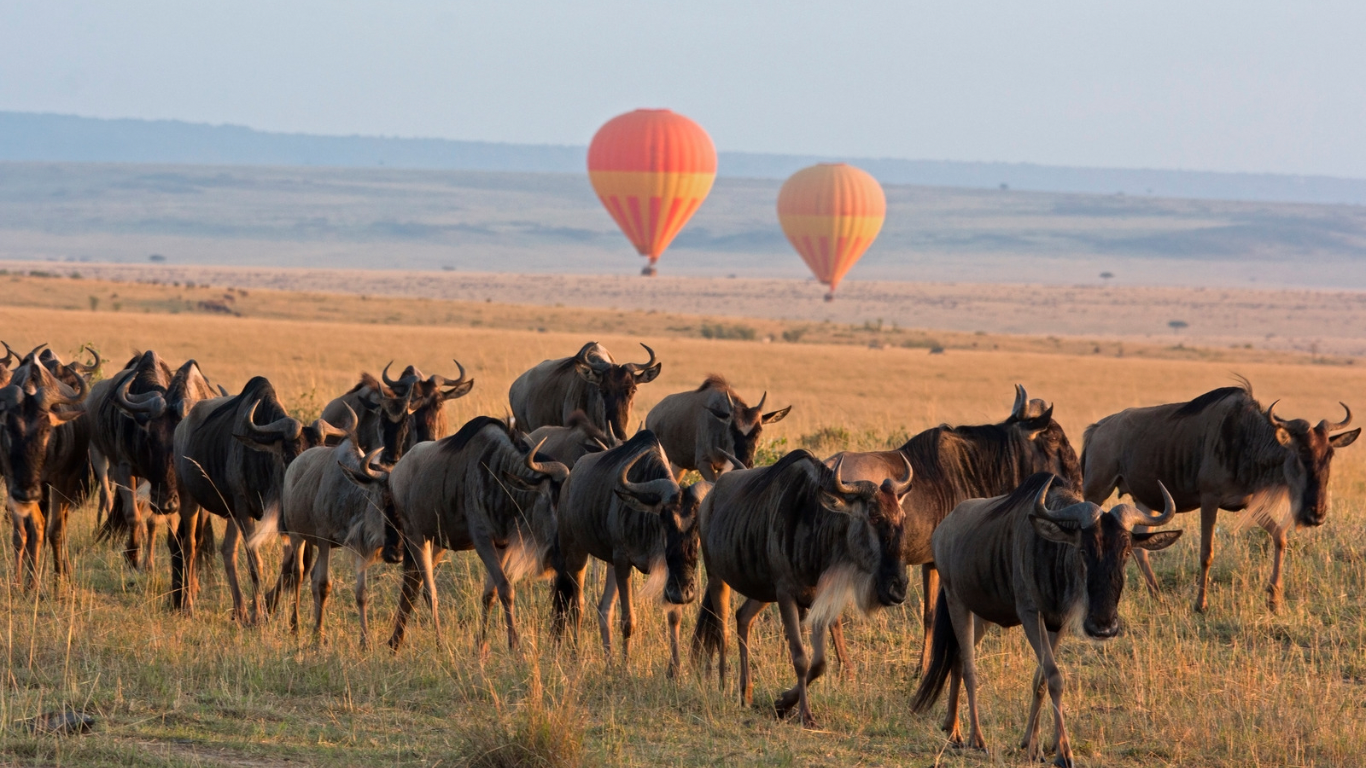
Voted as one of the most awe-inspiring natural spectacles on Earth, the Great Wildebeest Migration is an extraordinary annual journey that draws travelers from across the globe. Every year, millions of wildebeest, zebras, and other herbivores embark on a relentless, circular trek through the Serengeti in Tanzania, and into Kenya’s Masai Mara, in search of fresh water and lush grazing grounds.
This epic migration is not only a vital survival strategy for the animals involved but also one of the most captivating sights for wildlife enthusiasts and photographers alike, offering a visual feast of raw nature’s power and beauty.
Timing Your Visit for the Ultimate Experience
Witnessing the Great Migration is a bucket-list experience, but timing is everything. The scenery and wildlife activity change throughout the year, so partnering with an experienced tour operator like Excited Expedition is key. Our guides have in-depth knowledge of the migration paths and best viewing times, ensuring you don’t miss the action.

January – February: During this time, the wildebeests assemble by the droves in the southern part of the Serengeti where they give birth to thousands of baby calves. This is also known as the Serengeti calving season. The soil in this area is rich in potassium, phosphorus, and calcium, so the grass is usually lush.
March: This period sees extensive levels of predatory activities taking place as the huge congregation of so many preys and new calves make easy targets for lions, cheetahs, and other carnivorous animals. This action quickly prompts a change of environment for the wildebeests.
April – May: This is when the Serengeti starts to dry up and the grass disappears prompting the herds to move west towards the Grumeti River.
June – July: At this time, the herds begin heading towards the Masai Mara, but before they get there, they are faced with the challenging obstacle of crossing the Grumeti river. This is arguably the best time of the year as travelers would be able to view all the excitement unraveling around the Grumeti River and beyond.
August – September: By this time, the herds have crossed the Grumeti river and are en route to the Mara River. This is also a dramatic crossing that captures nature in its rawest form.
October: This month sees the herds crossing the Mara river into the pool-table flat Masai Mara grasslands where they usually graze till the end of the month and continue their journey back to the northern Serengeti where short grass will have become abundant.
November – December: The wildlife reaches the Seronera area where they will remain till they head back to the southern part of the Serengeti for calving season.
INTERESTING FACTS ABOUT THE ANNUAL GREAT WILDEBEEST MIGRATION

World’s largest concentrated migration of wildlife traveling over 800 km on an annual journey.
It’s the world’s largest continuous movement of land animals, spanning over 800 kilometers annually.
Over 1.5 million wildebeest, along with zebras, gazelles, impalas, and other herbivores, participate in this colossal trek.
Zebras and wildebeest have a symbiotic relationship—they graze different parts of the same plants, helping each other survive the journey.
Wildebeests are expert water detectors, using their keen sense of smell to locate underground water sources, guiding herds across vast landscapes.
The Serengeti ecosystem is one of the oldest on the planet, maintaining its ancient vegetation, climate, and wildlife patterns for thousands of years.
Calf production is staggering—around 8,000 wildebeest are born daily over a three-week period in mid-February, with calves capable of walking within minutes of birth.
Predators such as lions, hyenas, crocodiles, and cheetahs hunt the herds, adding to the drama of this natural spectacle.
The migration predominantly unfolds within Tanzania’s Serengeti, crossing through Ngorongoro, Loliondo, and Grumeti reserves, before reaching Kenya’s Masai Mara.
SERENGETI NATIONAL PARK
The Serengeti National Park is the jewel of Tanzania and is famous for its abundance of wildlife, long stretches of rolling grasslands, breathtaking rivers, and budding ecosystem.
It is bordered by Kenya to the north where it runs into the Maasai Mara National Reserve; the Ikorongo and Grumeti game reserves to the west, while the Ngorongoro conservation area to the southeast, and to the northeast lies the Loliondo Game controlled area, all together forming the larger Serengeti ecosystem which consists of five main regions.
With the Serengeti plains known for its treeless grassland and a natural habitat where wildebeest and other hoofed animals such as gazelles, impalas, zebras, topi, hartebeests, buffalos, and waterbucks breed.
THE SOUTHERN SERENGETI
The Southern Serengeti plains are home to numerous migratory herds especially during the green season due to its nutrient-rich plains with short grasses rich in phosphorus, making it an ideal location for the Great wildebeest migration calving season with a spectacular wildlife viewing of over two million animals spread across the open plains.
Much of the Southern Serengeti lies outside of the Serengeti national park so unlike other areas of the Serengeti, off-road driving and walking safaris are permitted. The Southern Serengeti plains are excessively seasonal so during the dry season, the Southern Serengeti is transformed into a semi-desert and herds usually drift off these plains as the area dries out.
THE CENTRAL SERENGETI (SERONERA)
A lively and vigorous wildlife area, the Central Serengeti is renowned as the best resident game compared to other regions of the Serengeti National park as it is ideally located centrally. It is the perfect location for a well-rounded safari adventure because game viewing here in the Central Serengeti is excellent at any time of the year.
During May and early June, the northbound wildebeest migrate to through the Central Serengeti and again in November to early December, the wildebeests also migrate when they are on their way back south to the short grass plains.
THE NORTHERN SERENGETI
This region is home to large herds migrating during the months of July to November. It is a relatively unexplored wilderness boasting some amazing landscapes and inhabited by scores of magnificent wildlife.
Visitors here are offered exceptional and dramatic sightings of wildebeest and zebras as they make the perilous journey across the Mara river into the Masai Mara region. These animals are not just wary of the large crocodiles lying in wait, but also the but also the rushing waters of the river itself.
It is a tense moment for some visitors as they witness these exhausted and terrified wildebeests and zebras attempt to brave the torrential flow. Some are able to make it across with exerted efforts, but others are not so lucky as the strong water currents either drown them or return them to the same side of the river allowing the ordeal to begin again.
THE GRUMETI RESERVE
Established in 1994 covering 2000 sq km, the Grumeti game reserve forms a part of the larger Serengeti Masai Mara ecosystem where the annual great wildebeest migration takes place and is located along the Northwestern border of the Serengeti National Park and this is where it is easy to see the movement of huge herds of zebra and wildebeest.
The most suitable time to visit this reserve is from June to October and January to February. A migratory corridor for herds of animals passing through the area naturally, the Grumeti game reserve is a remote lush location that offers a far greener safari experience with rolling hills, river and woodlands patch, worked into the extended terrain as far as the eye can see.
MASAI MARA
This is where the herds face off against the turbulent waters and the hungry crocodiles of the Mara river. Those that do make it across are rewarded with the lush grazing grass stretching across the rolling plains of the Masai Mara.
By the end of May, the rains will have fully ceased, prompting the herd to move northward. However, the dry months of July through October remains the perfect game viewing period as the receding vegetation makes it a lot easier to witness the animals as they continue their movement back to the Serengeti.
Only a fraction of the greater Mara ecosystem, The Masai Mara is a large game reserve in Narok County, Kenya neighboring with the Serengeti national park in the Mara region, Tanzania. It is known for its exceptional population of predators and prey alike — cheetahs, leopards, and lions and the annual migration of zebra, Thomson’s gazelle, topi and wildebeests to and from the Serengeti annually from July to October.
The wildebeests, topi, zebra, Grant’s gazelle migrate into and occupy the Mara reserve from the Serengeti plains to the south and Loita plains in the pastoral ranches to the northeast.
Why Book with Excited Expedition?

While the Great Migration occurs annually, catching the exact moments—like the iconic Mara River crossings—requires expert planning. Without local knowledge, it’s easy to miss these incredible sights. That’s why partnering with Excited Expedition is your best bet.
Our experienced guides know the migration’s timing and routes intimately. We craft personalized itineraries that put you in the right place at the right time, so you can witness this awe-inspiring event firsthand.
Booking in advance is highly recommended, especially during peak season when accommodations fill up quickly and prices rise. Let Excited Expedition help you plan a seamless, unforgettable journey to witness nature’s most spectacular migration.
Get in Touch
Ready to embark on your Great Wildebeest Migration adventure? Contact Excited Expedition today, and let us tailor a safari experience that will leave you with memories to last a lifetime!



 English
  German
Leave a Reply