
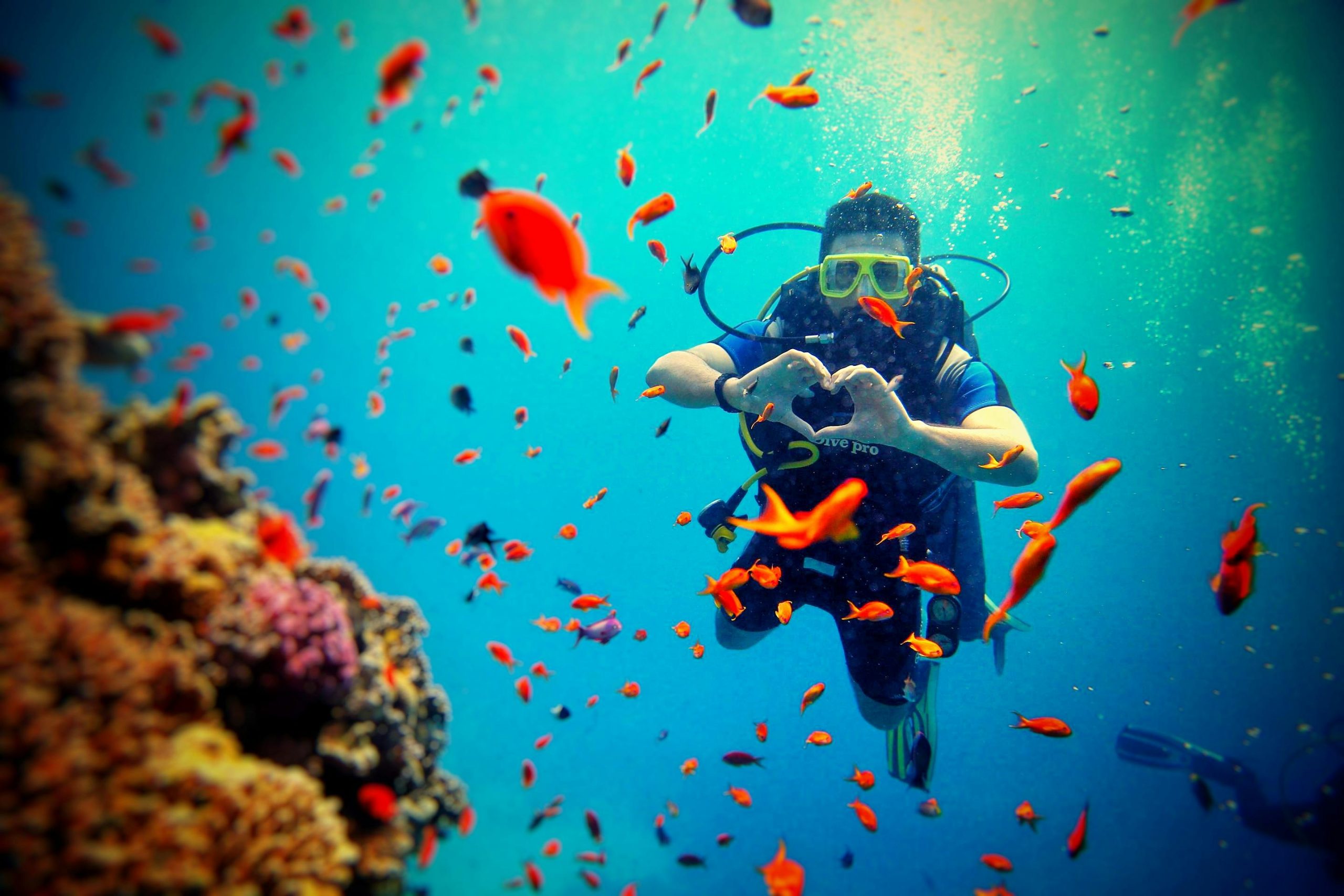
Zanzibar is one of the best places in the world for scuba diving. This tropical island, surrounded by the warm waters of the Indian Ocean, offers clear blue seas, colorful coral reefs, and a wide variety of marine life. Whether you are a beginner or an experienced diver, Zanzibar has something to offer. The island’s dive sites range from shallow coral gardens to deep underwater walls. This variety makes every dive a new and exciting experience.
Mnemba Atoll is easily reached from Matemwe, the reef of this small atoll is probably the most popular diving area in the whole of Tanzania.
Many take advantage of the beauty of Mnemba and of its shallow but rich coral reef. Mnemba also has a relatively undiscovered side, with excellent dives at considerable depths and incredible water clarity for good photography.
Best Time to Dive in Zanzibar
Zanzibar offers great diving conditions throughout the year. However, the best time for scuba diving is from June to October and December to March. These months provide the clearest waters, calm seas, and excellent visibility—often up to 20–30 meters.
From November to April, whale sharks are more commonly seen near Zanzibar’s coastline. This period gives divers the best chance to spot these gentle giants.
The rainy seasons (April–May and November) may bring storms and reduce visibility. Some dive trips could be canceled due to weather. If you enjoy warmer water, visit in January and February, when ocean temperatures can reach up to 30°C (86°F)—ideal for long, relaxing dives.
Best Dive Sites in Zanzibar
There are numerous dive sites all around the island, with visibility often in excess of 20 metres.

Kichwani
Level: beginner-intermediate
Depth: 2-30 m
A gentle sloping wall covered in soft corals. The reef starts at 2 m and goes down to 30 m, creating a beautiful coral wall. Kichwani is home to many schools of reef fish in a myriad of colours, which makes this Mnemba dive site suitable for snorkellers too. For the diver with a sharp eye, pipe fish, leaf fish and nudibranchs can be found.


Wattabomi
Level: beginner-intermediate
Depth: 5-20 m
This is a great reef for all experience levels; it starts in 5 m of water at Mnemba’s Moray Eel City, which is covered in lion fish, scorpion fish, moray eels and darting inquisitive anthias. This site has a gentle slope which helps the diver decide which depth suits their experience. Wattabomi is a puzzle of coral blocks which are home to frog fish, the Indian walkman, stone fish and many other reef fish. Snow capped anemone shrimps, porcelain crabs and many different nudibranchs can be spotted there.
The Small Wall
Level: intermediate-advanced
Depth: 5-40 m
This is a great drift dive for the more experienced diver. The reef starts shallow and slopes down to 30 m, where it drops down vertically to 45-50 m. Several Napoleon wrasses live in this area, and sometimes white tip reef sharks can be found on the bottom. Sting rays, eels and scorpion fish can be spotted on the shallower part of the reef. The endemic and elusive Zanzibar butterfly fish can sometimes be seen in this area of Mnemba Atoll.


Turtle Reef
Level: intermediate-advanced
Depth: 5-30 m
Another great drift dive with a sloping reef leading onto coral blocks surrounded by large schools of fish feeding in the current. With a bit of luck, a turtle can be spotted there. The dive usually ends near the southern tip of Mnemba, where large schools of chubs are normally present, and where giant blue fin trevally come out of the blue to hunt on the reef.
Mnemba – Aquarium
Level: intermediate-advanced
Depth: 12-25 m
There is usually a slight current at this site and it is best dived in drift. Long strips of hard coral outcrops are surrounded by sand. Surgeon fish, moorish idols, parrot fish, groupers, giant trevallies, unicorn and trigger fish frequent this reef. Large numbers of crescent tail big eyes drift above the hundreds of garden eels just off the reef.


Grouper’s Rock
Level: intermediate-advanced
Depth: 12-25 m
Starting at 12 m a large coral formation houses plenty of tropical fish and several moray eels, while further deep there are several grouper’s caves where occasionally reef sharks can be found too. In season, spanish dancers can be spotted sleeping on the white sands along with sometimes very active nudibranchs on the beautiful coral gardens.
Sand Banks
Level: beginner-intermediate
Depth: 5-15 m
This relaxing dive is perfect for a second shallow dive after a deep first dive. Beautiful coral gardens spread out from 8 to 16 m. Hard and soft corals blend gracefully in the mild current, offering shelter to a wide variety of butterfly fish, puffer fish and sweet lips. Large schools of yellow banded snappers, big eyed trevally jacks and bat fish are often found in this area of Mnemba.


Big Wall
Level: advanced-expert
Depth: 12-50 m
Warning: this dive site at Mnemba Atoll can only be dived with very calm seas with groups of advanced repeater divers.
We usually drop in blue water, and after a short swim arrive to the wall itself. The top of the wall starts at 40-50 m, and drops to 80-90 m. When the currents are favourable, large schools of fish can be found here (barracudas, bigeye trevally jacks), as well as some white tip reef sharks, black tip reef sharks and Napoleon wrasses. The bottom, covered in large barrel sponges and long whip corals, then slopes up to a shallow reef around 14 m, perfect to finish the dive.
Jack Fish
Level: advanced-expert
Depth: 10-50 m
Warning: this dive site at Mnemba Atoll can only be dived with very calm seas with groups of advanced repeater divers.
This site starts on a beautiful shallower reef full of vibrant hard corals and colorful reef fish like butterfly fish and triggerfish. The wall starts abruptly around 18 m and drops to around 50 m. Well placed on the wall are beautiful pristine whip corals rarely found in such good health as well as many small pockets in the wall hiding communities of reef fish, lobsters and moray eels. Large fish can also be seen in the blue and below you, like black tip sharks, white tip sharks, large groupers and turtles if you are fortunate., where I spent the rest of the day relaxing and reflecting on the last two days.
Zanzibar Diving Packages
There are many dive centers across Zanzibar offering scuba packages for all skill levels. Here’s what to expect:
Beginner Packages
These packages include full training, equipment rental, and 1–2 guided dives. Prices range from $80–$120 per dive.
PADI Certification Courses
Courses like Open Water and Advanced Open Water are available. Prices usually range between $400–$600, allowing you to get certified while exploring Zanzibar’s reefs.
Fun Dive Packages
Certified divers can book multiple dives at discounted rates. Prices are typically $40–$70 per dive depending on the location.
Specialty Dives
Want something unique? Try night dives, wreck dives, or deep-sea dives. These range from $50–$100 and offer unforgettable experiences.
Final Verdict
Zanzibar is a true paradise for scuba divers. With warm waters, abundant marine life, and diverse dive sites, it’s perfect for beginners and seasoned divers alike.
Whether you want to relax in coral gardens or take on deep-sea challenges, scuba diving in Zanzibar will quickly become one of your favorite adventures.
If you love the ocean and crave discovery, then Zanzibar should be at the top of your scuba diving bucket list.
FAQ’s
1. Is Zanzibar good for beginner scuba divers?
Yes, Zanzibar is ideal for beginners. Many dive centers offer training and guided dives in calm, shallow waters with excellent visibility.
2. Do I need a scuba certification to dive in Zanzibar?
No certification is needed for beginner dives. However, for deeper or advanced dives, a PADI or equivalent certification is required.
3. What marine life can I expect to see in Zanzibar?
You may see sea turtles, dolphins, reef sharks, parrotfish, moray eels, and even whale sharks during certain months.
4. How much does scuba diving in Zanzibar cost?
Beginner dives start around $80–$120, while certified divers can pay $40–$70 per dive. Courses and specialty dives vary in cost.
5. What is the best time to see whale sharks in Zanzibar?
The best time to spot whale sharks near Zanzibar is between November and April, especially in warmer waters.



 English
  German
Leave a Reply